
DataHawk Reviewed: Is This Marketplace Analytics Platform Right for Your Enterprise in 2026?
In the fiercely competitive world of e-commerce, staying ahead requires more than just selling products; it demands deep, actionable insights into marketplace performance. DataHawk, a platform designed for Amazon, Walmart, and Shopify growth, promises to deliver unified marketplace analytics for enterprise-level businesses. But in 2026, with a crowded market of analytics tools, does DataHawk truly stand out?
As senior tech writers and product analysts at WiseRankr.com, we've delved deep into DataHawk's offerings, scrutinizing its features, pricing, and, most importantly, real-world user experiences. Our goal is to provide an honest, evidence-backed review to help you determine if DataHawk is the right strategic partner for your e-commerce ambitions.
Overview: Unifying E-commerce Data for Enterprise Growth
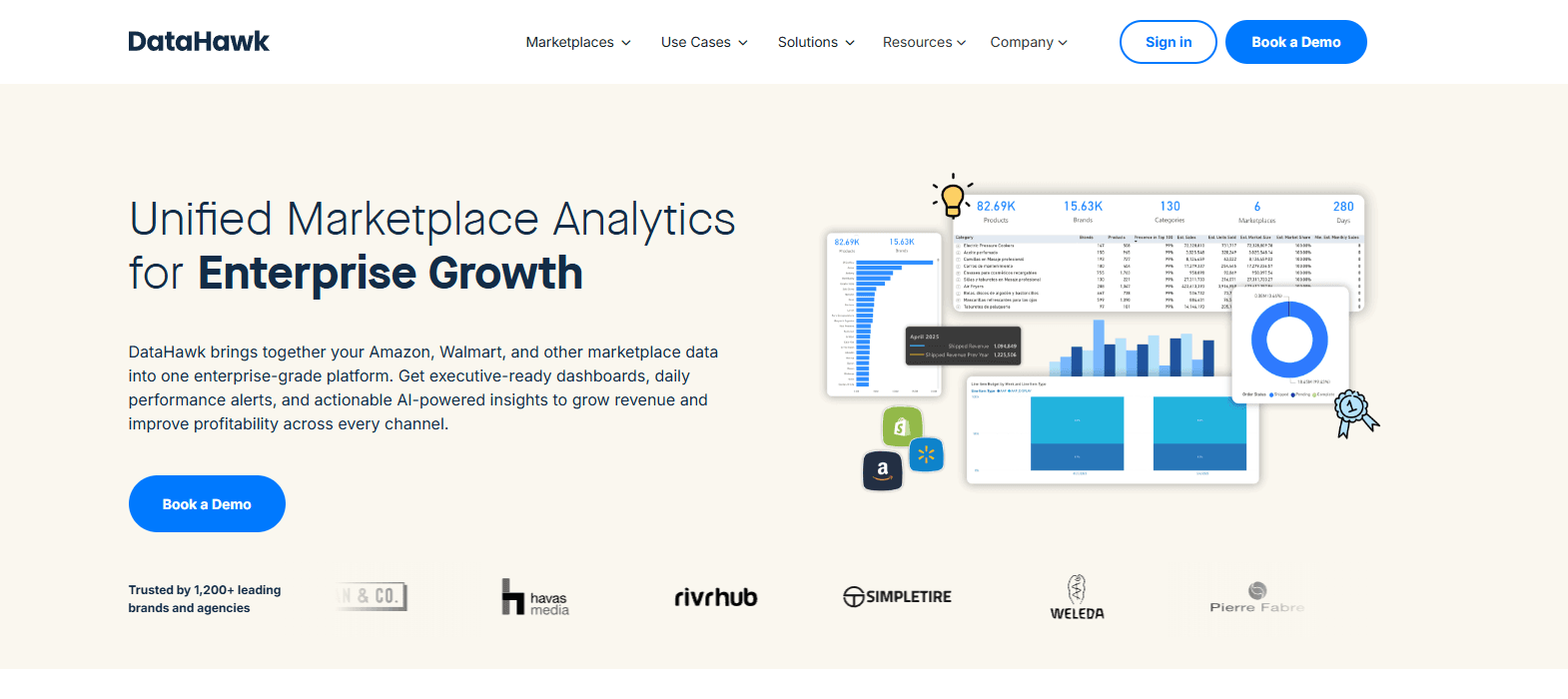
DataHawk positions itself as a comprehensive solution for brands and agencies navigating the complex landscape of online marketplaces. Its core value proposition revolves around bringing together disparate data from Amazon, Walmart, and Shopify into a single, unified platform. The company emphasizes "executive-ready dashboards, daily performance alerts, and actionable AI-powered insights" to drive revenue and improve profitability.
The platform's origin story, as shared on their website, stems from the founders' own struggles with fragmented and costly data access while working as retail and technology experts. This led them to create DataHawk as an "accessible, unified and flexible" alternative. Since its inception, DataHawk has garnered trust from over 1,200 leading brands and agencies, an impressive claim that suggests a strong foothold in the market.
A significant development in DataHawk's journey was its acquisition by Worldeye Technologies on March 15th, 2025. Worldeye Technologies, also the parent company of Viral Launch and BidX, aims to create a more integrated performance suite for marketplace sellers. While DataHawk continues to operate independently with its existing team and services, this acquisition could signal future integrations and a broader ecosystem of tools.
Key Features: Deeper Data, Broader Coverage, AI-Powered Insights
DataHawk highlights several key aspects that define its "experience," focusing on an end-to-end approach, integrated AI, and intuitive dashboards. Let's break down what DataHawk delivers:
Broader Coverage
DataHawk aims to provide streamlined and unified end-to-end e-commerce visibility across multiple marketplaces. This means optimizing performance not just on Amazon, but also Walmart and Shopify, right "out of the box." This multi-marketplace approach is crucial for businesses with diverse sales channels, allowing them to consolidate data that would otherwise be siloed.
Deeper Data
The platform promises the "most comprehensive marketplace data possible" in one place. This includes access to enriched and historical data, which is vital for identifying trends, preempting threats, and capitalizing on opportunities. Users on Trustpilot, such as one from May 2025, have praised DataHawk for its ability to pull Amazon data, stating, "They clearly articulate how they pull it, where it comes from and how it connects to a different tables."
More Flexibility
DataHawk offers customization and extensibility, allowing users to tailor the platform to specific business challenges or emerging use cases. It supports the use of preferred data and analytics tools, indicating an open approach to integration and workflow. This is a significant advantage for larger enterprises with existing tech stacks.
Full Control
Unlike what DataHawk refers to as 'black box' platforms, it emphasizes giving users "full control over your own operational data." This means the ability to access and export data whenever and wherever, without lock-in. This promise of data ownership and accessibility is often a critical factor for enterprise clients.
Expert Support
The company prides itself on being serviced and supported by e-commerce and data experts who understand the specific challenges faced by sellers. This commitment to expert support is reinforced on their pricing page, which details "Onboarding," "Customer Success," and "Professional Services." Users on G2 and Trustpilot frequently commend the responsiveness and expertise of the DataHawk team. For example, a Trustpilot review from May 2025 highlighted, "their team has been responsive and helpful anytime we've had questions."
AI-Powered Insights
DataHawk leverages machine learning and AI to monitor data, guide decision-making, diagnose and prioritize actions, and even help automate them. The website explicitly states, "DataHawk’s AI powers your productivity across the board." Recent blog posts from March 2026 also discuss "AI Agents for Amazon & Walmart Sellers: Turn Data Into Fast Decisions & More Sales," indicating a strong focus on AI-driven automation and insights.
Specific AI-powered features mentioned in research include an AI Copywriter tool that helps optimize listing content by providing AI-generated suggestions, showcasing DataHawk's commitment to integrating advanced technologies into practical applications.
Pricing: Custom Plans for Enterprise Needs
DataHawk employs a custom pricing model, tailored specifically for businesses with annual plans. There are no publicly listed pricing tiers or self-serve signup options. The pricing page emphasizes "Custom Plans That Turn Marketplace Data Into Revenue Clarity."
According to AI research, DataHawk's pricing is based on two main components:
- Platform fee: Determined by sales volume.
- Credits fee: Based on the number of keywords, products, and categories tracked (1 product = 1 credit, 1 keyword = 1 credit, 1 category = 50 credits).
This enterprise-focused approach means potential users need to book a demo to receive a personalized quote. DataHawk does not offer a free plan, although some sources mention a 14-day free trial available upon requesting a demo, with acceptance dependent on the business's suitability. This lack of pricing transparency is a common complaint among users looking to compare tools upfront.
User reports suggest that costs can be in the mid-four-figures per year for moderate usage, scaling significantly for large catalogs. Enterprise plans include "white-glove onboarding, dedicated account management, and ongoing analytics guidance." The requirement for an annual commitment means there is no monthly option, which can be a barrier for some businesses.
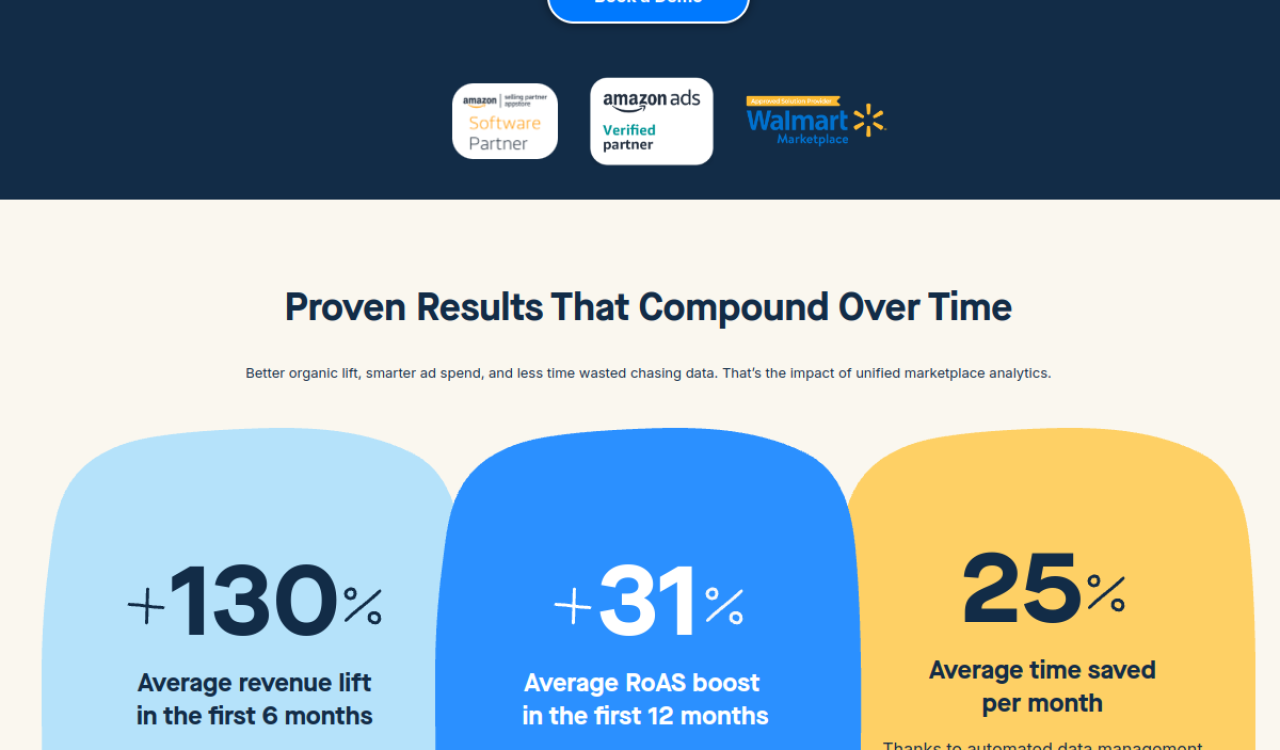
DataHawk claims impressive results with its pricing structure, stating "130 Average revenue lift in the first 6 months" and "31 Average RoAS boost in the first 12 months." They also report "25 Average time saved per month" thanks to automated data management and analytics.
User Experience & Reviews: A Mixed Bag for a Powerful Tool
DataHawk generally receives positive feedback for its comprehensive data capabilities and expert support, though some criticisms persist regarding its complexity and pricing model.
Positive Sentiment
- Comprehensive Data & Automation: Users on G2 frequently praise the automated data collection from Amazon. One verified user noted, "I love that data collection from Amazon is automated." This automation is a significant time-saver, contributing to the "25 Average time saved per month" claimed by DataHawk.
- Responsive Support & Expertise: Multiple Trustpilot reviews highlight the quality of DataHawk's customer service. A review from May 2025 stated, "The platform is user-friendly, and their team has been responsive and helpful anytime we've had questions. It's helped streamline our reporting and given us clearer visibility into key metrics." Another user from May 2025 appreciated the team's intelligence regarding Amazon data, noting, "They clearly articulate how they pull it, where it comes from and how it connects to a different tables."
- Intuitive Setup (for some): While the platform can be complex, some G2 users report that DataHawk's setup process is "slightly more intuitive" compared to alternatives, which can be beneficial for businesses seeking quicker implementation, especially with the "Fast go-live within weeks" promise.
- Unified View: The ability to unify Amazon, Walmart, and Shopify data into one platform is a major draw, providing a holistic view of marketplace performance that many users find invaluable for strategic decision-making. Case studies on DataHawk's site, like that of T'nB, reinforce this, with their Digital Services Manager stating, "DataHawk had all the data and features we needed, with analytic and reporting capabilities we couldn’t find elsewhere."
Areas for Improvement & Criticisms
- Buggy Software & Missing Data: A critical Trustpilot review from August 2021 mentioned the software being "Very buggy, often fails to track different products or misses data points." While this review is older, it highlights past concerns about data reliability. A G2 review also cited issues with features being removed after subscription without explanation, leading to user frustration.
- Lack of Pricing Transparency: The custom pricing model, requiring a demo and annual commitment, is a frequent point of frustration. Users cannot easily compare costs or budget without direct engagement, making it less accessible for smaller or mid-sized businesses.
- Steep Learning Curve: Despite some claims of intuitive setup, the depth and breadth of data can make the platform complex, requiring dedicated resources and time to master. This is a common characteristic of powerful enterprise analytics tools.
- Not for Small Sellers: The enterprise-focused nature and higher price point make DataHawk less suitable for early-stage or low-volume sellers. It's an investment designed for companies managing large catalogs and significant sales volumes.
- Limited Financial Analysis Depth: Some users desire more granular financial breakdowns beyond what DataHawk currently offers.
- Feature Gaps Compared to Competitors: Compared to tools like Helium 10, DataHawk's product and keyword research tools are reported to be less developed. It also lacks a mobile app or Chrome extension, restricting users to the web app interface. There's no built-in PPC repricer or automated refunds, nor a dedicated listing builder or keyword research tool for content creation.
- Walmart Support Maturation: While DataHawk supports Walmart, some users feel its capabilities for Walmart are less mature than for Amazon in certain advanced use cases.
- Date Format Bug: A GitHub issue from June 2025 indicates a bug related to date and time formats (USA/UK) not being accepted, leading to errors in audit log searches. While this is a specific technical issue, it points to ongoing maintenance and potential for minor bugs.
Overall, DataHawk holds a respectable G2 rating of 4.3/5 and a Trustpilot rating of 3.9/5 . The sentiment leans positive for those who are well-suited for the platform's enterprise focus and can leverage its comprehensive data and support, but it's not without its technical glitches and accessibility limitations.
Integrations: Flexible and Extendable
DataHawk offers an extensive list of integrations on its website. The platform connects with major BI and data tools including Snowflake, Power BI, Looker Studio, Google Sheets, Excel, BigQuery, Tableau, Amazon QuickSight, Qlik, Sisense, and Metabase. For data engineering workflows, it integrates with Zapier, Python, Alteryx, Azure Data Factory, Domo, Mode, Adobe Campaign, NetSuite, Ab Initio, Acryl Data, and Alation. This broad integration ecosystem allows users to export and analyze their marketplace data using their preferred tools and workflows.
The core integration is with Amazon, Walmart, and Shopify marketplaces, pulling data directly from these sources to provide a unified view. For the full list of integrations, visit datahawk.co/integrations/.
Pros & Cons
Pros:
- Unified Multi-Marketplace Analytics: Consolidates data from Amazon, Walmart, and Shopify into a single platform.
- Comprehensive & Historical Data: Provides deep, enriched historical data for trend analysis and strategic planning.
- AI-Powered Insights & Automation: Leverages AI and machine learning for decision guidance, action prioritization, and automated data collection/hygiene.
- Expert Support & Onboarding: Offers dedicated customer success, onboarding, and professional services from e-commerce experts.
- Data Control & Flexibility: Allows full control, access, and export of operational data, supporting integration with other tools.
- Enterprise-Grade Solution: Built for brands and agencies managing large catalogs with complex analytics needs.
- Frequent Updates: Users note frequent product improvements and new feature launches.
Cons:
- Custom, Opaque Pricing: No public pricing tiers; requires a demo and annual commitment, making upfront cost comparison difficult.
- Not Ideal for Small Sellers: The enterprise focus and cost can be prohibitive for smaller businesses or individual sellers.
- Steep Learning Curve: Can be complex to set up and master due to the depth of data and features.
- Reported Bugs & Inconsistencies: Some past user reviews mention buggy software, missing data points, and features being removed without notice.
- Limited Feature Set Compared to Some Competitors: Lacks dedicated built-in PPC repricer, automated refunds, mobile app, Chrome extension, or advanced keyword/product research tools found in some alternatives.
- Walmart Support Maturation: While available, some advanced Walmart use cases may feel less developed than Amazon.
- Annual Commitment: No monthly billing option, requiring a year-long commitment.
Who Is It For?
DataHawk is clearly designed for enterprise-level brands, agencies, and aggregators that operate at significant scale across Amazon, Walmart, and Shopify. It's for businesses that:
- Need to unify complex data from multiple marketplaces into a single, executive-ready view.
- Require deep, historical data analytics to track trends, identify opportunities, and mitigate risks.
- Can dedicate resources to onboarding and mastering a powerful, feature-rich analytics platform.
- Prioritize AI-driven insights and automation to improve efficiency and decision-making.
- Are looking for a partner with expert support and professional services to guide their e-commerce strategy.
- Manage large product catalogs and significant sales volumes where the investment in a custom, annual plan is justified by potential revenue and RoAS boosts.
It is not for:
- Small businesses, individual sellers, or those with limited budgets looking for a low-cost, self-serve solution.
- Users seeking basic Amazon FBA tools, as its capabilities go far beyond that.
- Those who prefer monthly billing or a free trial without a demo requirement.
Alternatives
The e-commerce analytics space is robust, with several strong alternatives to DataHawk, each with its own strengths:
- Helium 10: Often compared directly, Helium 10 is considered more comprehensive for general Amazon sellers (beginner to expert) with a wider range of tools for product, keyword, and market research. It offers transparent pricing and a free trial with no expiration date. However, DataHawk supports a larger number of Amazon marketplaces.
- Jungle Scout: Another prominent competitor, offering tools for product research and sales analytics, often favored by Amazon sellers.
- Polar Analytics: Positioned as a strong alternative, offering full-stack e-commerce analytics, first-party attribution, profit analytics, and AI agents, with a dedicated Snowflake warehouse. Polar Analytics claims to offer more accurate tracking and attribution, especially for Shopify brands.
- CommerceIQ, Teikametrics, Stackline, Edge by Ascential: These are other enterprise-level competitors that focus on various aspects of e-commerce optimization, often with robust analytics and automation features.
- Viral Launch & BidX: Now part of the same parent company (Worldeye Technologies) as DataHawk, these tools specialize in product launches and ad automation/bid optimization, respectively, and could potentially offer more integrated solutions in the future.
The choice among these alternatives often comes down to specific needs, budget, and the desired level of hands-on management versus automation.
Verdict
DataHawk presents itself as a powerful, enterprise-grade solution for unifying marketplace analytics across Amazon, Walmart, and Shopify. Its commitment to deep, comprehensive data, AI-powered insights, and expert support makes it a compelling option for large brands and agencies in 2026. The reported average revenue lift and RoAS boost suggest that for the right users, DataHawk can deliver significant ROI.
However, its custom pricing model and annual commitment mean it's not a tool for casual exploration or small-scale operations. Potential users must be prepared for a significant investment and a learning curve, though the promised "white-glove onboarding" aims to smooth this transition. While there have been some past reports of bugs and feature removals, recent user reviews generally praise the platform's reliability and the responsiveness of its support team.
For businesses that are serious about mastering their digital shelf, have a substantial presence on Amazon, Walmart, and/or Shopify, and are ready to invest in a sophisticated analytics platform with dedicated support, DataHawk is definitely worth exploring through a demo. It offers a strategic advantage by consolidating data and providing actionable intelligence, helping enterprises make smarter, data-driven decisions in a highly competitive e-commerce landscape.
Ultimately, DataHawk is a specialized tool for a specialized audience. If you fit the profile of a large brand or agency seeking a unified, AI-enhanced analytics platform with expert guidance, DataHawk could be a transformative partner for your e-commerce growth in 2026. If you're a smaller seller or prefer transparent, self-serve pricing, you might find other tools like Helium 10 or Jungle Scout more suitable.