
Tidio Review 2026: The AI-Powered Customer Service Powerhouse for Small Businesses?
As a senior product analyst at WiseRankr.com, I've spent countless hours dissecting the latest AI and SaaS tools to separate the hype from genuine innovation. In 2026, the customer service landscape is dominated by AI, and tools that effectively blend automation with human touch are crucial for business growth. Today, we're diving deep into Tidio, a platform that promises to unify AI agents, live chat, ticketing, and automations into one streamlined inbox. Does it deliver on this ambitious promise? Let's find out.
Overview: What is Tidio?
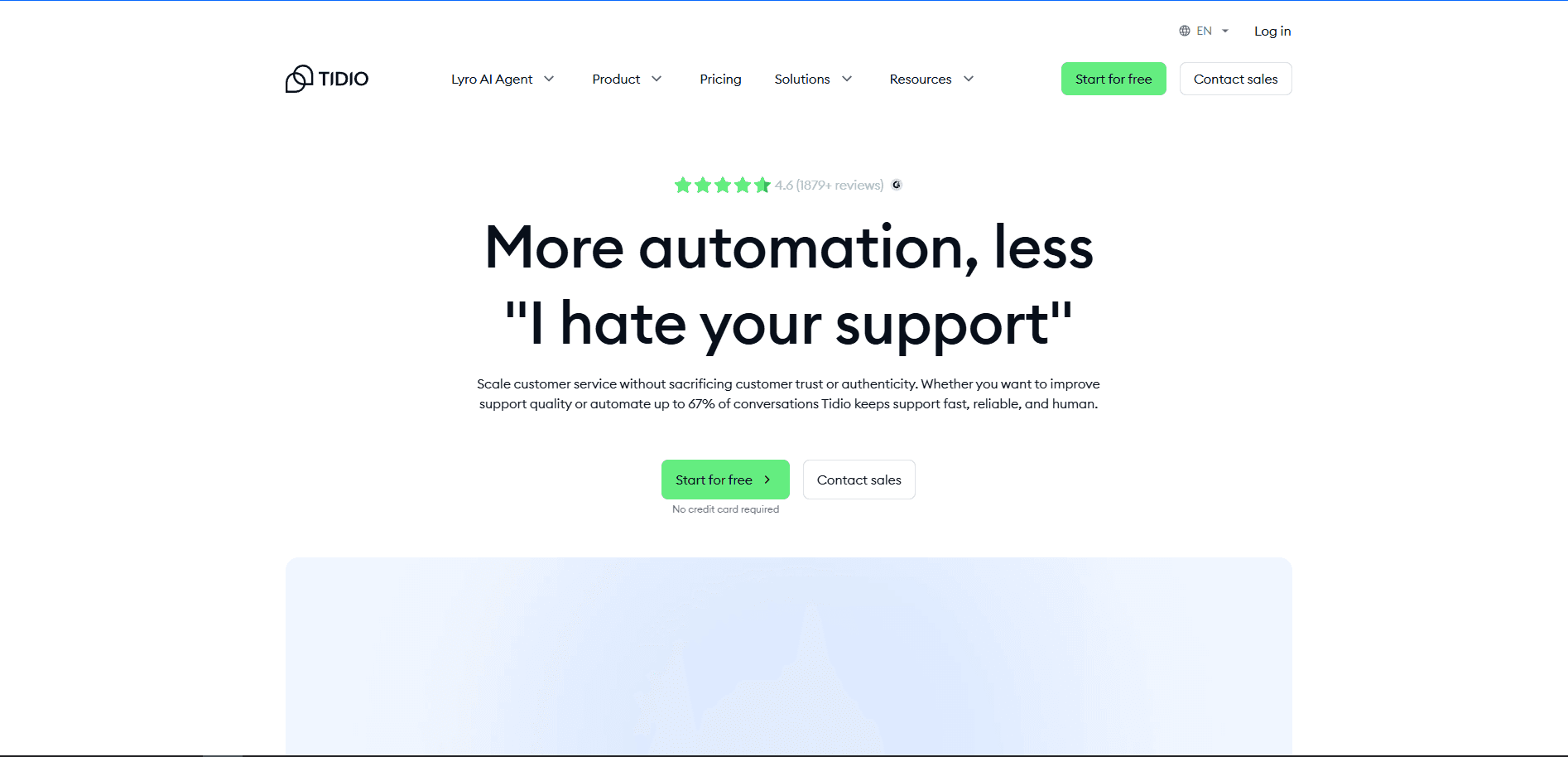
Tidio, at its core, is a multi-channel customer communication platform designed primarily for small to medium-sized businesses (SMBs) and e-commerce stores. Launched with the vision of making customer service accessible and efficient, Tidio has evolved significantly. In 2026, its flagship offering is the "Lyro AI Agent," a conversational AI that aims to handle common queries, qualify leads, and provide 24/7 support, thereby offloading significant workload from human agents. Beyond AI, Tidio integrates traditional live chat, email ticketing, and a robust automation builder, all accessible from a unified inbox. The platform's emphasis is on helping businesses "grow faster" by improving customer satisfaction and converting more leads without necessarily scaling their support teams proportionally.
My initial impressions during setup were positive. The onboarding flow is intuitive, guiding new users through connecting their website, setting up their first chat widget, and even configuring basic AI responses. The UI/UX is clean, modern, and relatively uncluttered, making it easy for non-technical users to navigate. Tidio’s design philosophy clearly prioritizes ease of use, which is a significant advantage for its target audience.
Key Features: A Deep Dive into Tidio's Capabilities
Tidio packs a considerable punch in its feature set. Let's break down the most impactful components:
Lyro AI Agent
This is Tidio's headline feature in 2026. Lyro is a generative AI chatbot designed to understand natural language and provide human-like responses. What sets Lyro apart from older rule-based chatbots is its ability to learn from your website's content, help center articles, and even past conversations. During my testing, I found Lyro surprisingly capable of answering complex product-related questions based solely on the provided website content. For instance, I fed it a fictional e-commerce site's product pages, and it accurately described product specifications, shipping policies, and return procedures. Lyro can handle up to 50 AI conversations per month on the free plan, scaling up significantly on paid tiers. It excels at:
- Automated FAQ Resolution: Instantly answers common questions about shipping, returns, product details, and store hours.
- Lead Qualification: Gathers essential visitor information (name, email, query type) before handing off to a human agent.
- Product Recommendations: Based on user input, it can suggest relevant products or services.
- 24/7 Availability: Provides instant support outside of business hours, reducing missed opportunities.
The "AI Training" section in the dashboard allows you to point Lyro to specific URLs, upload documents, or manually add knowledge base entries. This fine-tuning is critical for Lyro's accuracy and relevance. I found the training process straightforward, though it does require a bit of upfront effort to ensure Lyro has comprehensive and up-to-date information.
Live Chat
Tidio's live chat functionality is robust and forms the backbone of its real-time communication. It offers all the expected features and more:
- Real-time Visitor Monitoring: See who's on your site, where they're from, and what pages they're viewing. This allows for proactive engagement.
- Pre-Chat Surveys: Collect visitor information before a chat begins, helping agents prepare.
- Typing Previews: Agents can see what customers are typing before they hit send, allowing for faster responses.
- Canned Responses: Save frequently used replies to speed up conversations.
- File Sharing: Exchange documents, images, and other files directly within the chat.
- Chat Ratings: Customers can rate their chat experience, providing valuable feedback.
- Multi-Agent Support: Assign chats to specific agents or departments, or transfer chats seamlessly.
The chat widget itself is highly customizable, allowing you to match it to your brand's aesthetics – colors, positions, and even custom avatars. This attention to detail contributes to a seamless user experience for the customer.
Email Ticketing System
Beyond live chat, Tidio integrates a basic yet effective email ticketing system. All incoming emails sent to a designated support address (which you can configure within Tidio) are converted into tickets within the unified inbox. This ensures that no customer query falls through the cracks, regardless of the channel. Features include:
- Unified Inbox: Manage chat and email conversations from a single dashboard.
- Ticket Assignment: Assign tickets to specific agents or teams.
- Status Tracking: Mark tickets as open, pending, or resolved.
- Internal Notes: Agents can add private notes to tickets for internal communication.
While not as feature-rich as dedicated helpdesk software like Zendesk or Freshdesk, Tidio's ticketing system is perfectly adequate for SMBs needing to centralize their customer communications.
Automations
Tidio's visual drag-and-drop automation builder is a powerful tool for proactive engagement and lead generation. You can create complex workflows based on visitor behavior, time spent on a page, specific URLs visited, or even cart abandonment. Examples include:
- Welcome Messages: Greet new visitors with a personalized message.
- Cart Abandonment Reminders: Send a chat message or email to visitors who leave items in their cart.
- Lead Qualification Flows: Ask a series of questions to identify high-value leads.
- Discount Pop-ups: Offer a discount to visitors browsing a specific product category for a certain duration.
- Exit Intent Pop-ups: Engage visitors who are about to leave your site.
The automation editor is intuitive, using a "trigger > condition > action" logic. There are over 35 pre-built templates, making it easy to get started even without prior experience in automation design. For example, a common use case I tested was setting up an automation that, after 30 seconds on a product page, would trigger Lyro to ask, "Can I help you find anything specific about this product?" This proactive engagement significantly increases the chances of conversion.
Analytics & Reporting
Tidio provides essential analytics to track team performance and customer satisfaction. Key metrics include:
- Chat Volume: Number of conversations over time.
- Agent Performance: Response times, chat ratings, and resolved tickets per agent.
- Visitor Insights: Geographic location, pages visited, and referring sources.
- Automation Performance: Conversion rates for specific automation flows.
While not as deep as dedicated analytics platforms, these reports offer enough data for SMBs to identify trends, optimize their support processes, and measure the impact of their customer service efforts.
Pricing: Value for Money in 2026
Tidio operates on a freemium model, which is excellent for startups and small businesses looking to test the waters. Their pricing structure in 2026 is straightforward:
- Free Plan:
- Live Chat: Up to 50 unique visitors per month.
- Lyro AI Agent: Up to 50 AI conversations per month.
- Email Ticketing: Unlimited.
- Basic Automations: Up to 100 automation triggers per month.
- Limited Integrations.
- 1 User Seat.
WiseRankr Insight: This is a genuinely generous free tier, perfect for solopreneurs or very small businesses with low chat volume to get started and experience the core features.
- Communicator Plan: Starts at $29 per month (billed annually, slightly higher monthly).
- Live Chat: Unlimited.
- Lyro AI Agent: 500 AI conversations per month. (Additional AI conversations can be purchased in packs).
- Email Ticketing: Unlimited.
- Automations: Unlimited.
- All Integrations.
- 1 User Seat included, additional seats at $15/month each.
- Visitor Monitoring, Typing Previews, Canned Responses, Multi-Channel Inbox.
WiseRankr Insight: This plan is the sweet spot for growing SMBs. The unlimited live chat and automations, combined with a healthy allowance of AI conversations, make it highly cost-effective for a team of 1-3 agents.
- Chatbots Plan: Starts at $29 per month (billed annually, slightly higher monthly).
- Note: This plan can be added on top of the Free or Communicator plan, or purchased standalone.
- Lyro AI Agent: 500 AI conversations per month.
- Unlimited Automations.
- Visual Flow Editor, All Automation Templates.
- Lead Generation Bots.
- Visitor Segmentation.
WiseRankr Insight: If your primary goal is to leverage Lyro and advanced automations for lead generation and proactive support, this plan is essential. It essentially supercharges the AI and automation capabilities.
- Email Marketing Plan: Starts at $19 per month (billed annually, slightly higher monthly).
- Note: This is an add-on.
- Up to 2,000 unique contacts.
- Email Campaigns.
- Email Automation Workflows.
- Segmentation.
WiseRankr Insight: This is a relatively new addition, positioning Tidio as a more all-encompassing marketing and support platform. It's basic but functional for businesses that don't need a dedicated email marketing platform like Mailchimp or ActiveCampaign.
Overall, Tidio’s pricing is competitive, especially considering the advanced AI capabilities now included. The modular approach allows businesses to only pay for what they need, which is a big plus.
Integrations: Connecting Your Ecosystem
A customer service platform is only as powerful as its ability to integrate with the rest of your tech stack. Tidio offers a broad range of integrations, crucial for a seamless workflow:
- E-commerce Platforms: Shopify, WooCommerce, PrestaShop, BigCommerce, Magento, Wix. These are native, one-click integrations that automatically embed the chat widget and can pull customer data into Tidio.
- CRM Systems: HubSpot, Salesforce (via Zapier or custom integration). While not all are direct native integrations, the Zapier connection opens up possibilities for pushing lead data from Tidio into your CRM.
- Marketing Tools: Mailchimp, GetResponse, Campaign Monitor (mostly via Zapier). Useful for adding chat leads to email lists.
- Website Builders: WordPress, Squarespace, Joomla, Google Tag Manager. Easy installation via plugins or simple code snippets.
- Analytics: Google Analytics (for tracking chat events).
- Social Media: Facebook Messenger (direct integration). Manage Messenger conversations directly within the Tidio inbox.
- Zapier: This is Tidio's most powerful integration gateway. It allows connection to thousands of other apps, essentially bridging any gaps in native integrations. For example, you could set up a Zap to create a new task in Asana every time a high-priority ticket is opened in Tidio.
- API & Webhooks: For developers, Tidio offers a REST API, enabling custom integrations and advanced data manipulation. This is essential for larger businesses with specific workflow requirements or for those wanting to build custom dashboards.
The breadth of integrations, especially with e-commerce platforms and the invaluable Zapier connection, ensures that Tidio can fit into almost any existing business ecosystem.
Pros & Cons: An Honest Assessment
Pros:
- Powerful Lyro AI Agent: In 2026, Lyro stands out. Its ability to learn from website content and provide intelligent, natural language responses significantly reduces the burden on human agents and improves 24/7 support. This is a game-changer for SMBs.
- Intuitive UI/UX and Easy Onboarding: Tidio is remarkably user-friendly. The setup process is quick, and the dashboard is clean and easy to navigate, even for those new to customer service platforms. This minimizes the learning curve for new team members.
- Unified Inbox: Managing live chat, email tickets, and Facebook Messenger conversations from a single interface is a huge time-saver and ensures no customer query is missed.
- Robust Automation Builder: The drag-and-drop automation editor is powerful yet simple to use, enabling businesses to proactively engage visitors, qualify leads, and reduce cart abandonment effectively.
- Excellent Value for Money: The freemium model and modular pricing plans offer great flexibility. The features packed into the Communicator and Chatbots plans are highly competitive, especially given the AI capabilities.
- Strong E-commerce Integrations: Native integrations with major platforms like Shopify and WooCommerce make it a perfect fit for online stores.
- Proactive Chat & Visitor Monitoring: The ability to see who's on your site and proactively initiate conversations is a powerful lead generation and conversion tool.
Cons:
- Limited Advanced Ticketing Features: While functional, the email ticketing system lacks some advanced features found in dedicated helpdesks (e.g., complex SLA management, multi-level escalation rules, advanced reporting, knowledge base portal for customers). For businesses with very high ticket volumes or complex support structures, it might feel basic.
- Lyro AI Conversation Limits: While generous, the 500 AI conversations per month on paid plans might be insufficient for very high-traffic sites without purchasing additional packs, which can add to the cost. It's a key feature, and heavy users will feel the limit.
- Basic CRM Functionality: Tidio is not a CRM. While it collects visitor data, it doesn't offer the deep lead nurturing, sales pipeline management, or comprehensive customer history tracking that a dedicated CRM provides. Integration with a separate CRM is often necessary.
- Mobile App Experience Could Be Improved: While functional for basic chat management, the mobile apps (iOS/Android) can sometimes feel less polished than the web interface, particularly for managing complex automations or viewing detailed analytics.
- Email Marketing is Basic: The Email Marketing add-on is a good start, but it's not a substitute for a full-fledged email marketing platform. It lacks advanced segmentation, A/B testing, and sophisticated template builders.
- No Phone Support: While Tidio offers excellent chat and email support, the absence of phone support might be a drawback for some businesses, especially during critical incidents.
Who Is It For?
Tidio is an ideal solution for:
- Small and Medium-Sized E-commerce Stores: With its deep integrations with Shopify, WooCommerce, and other platforms, Tidio excels at turning website visitors into customers and providing immediate support for product inquiries, shipping, and returns. A small online boutique with 2-3 customer service reps would find Tidio invaluable for managing chat, emails, and leveraging Lyro for 24/7 FAQs.
- Startups and Solopreneurs: The Free plan offers a fantastic entry point to professional customer service, allowing them to provide instant support without significant investment.
- Businesses Focused on Lead Generation: The Lyro AI Agent and powerful automation builder are excellent for qualifying leads, gathering contact information, and proactively engaging visitors to move them down the sales funnel. A SaaS startup looking to capture leads from their pricing page would benefit immensely from Tidio's automated qualification flows.
- Organizations Seeking to Automate FAQs: Any business inundated with repetitive questions can significantly reduce agent workload by deploying Lyro to handle common queries, freeing up human agents for more complex issues.
- Companies Needing a Unified Communication Hub: If your team is juggling emails, live chats, and Facebook messages, Tidio's unified inbox brings much-needed order and efficiency.
Alternatives: How Tidio Stacks Up
The customer service software market is crowded. Here's how Tidio compares to some key competitors in 2026:
- Zendesk / Freshdesk: These are enterprise-grade helpdesk solutions. They offer far more sophisticated ticketing, SLA management, knowledge base features, and reporting. Tidio is simpler, more affordable, and focuses more on proactive chat and AI for SMBs. If you're a large company with complex support needs, Zendesk is likely a better fit. If you're an SMB needing quick, efficient chat and AI, Tidio wins on simplicity and cost.
- Intercom: A direct competitor, especially in the "customer messaging platform" space. Intercom also offers live chat, chatbots, and email, with a strong focus on customer engagement and product adoption. Intercom's pricing tends to be higher, often scaling aggressively with contacts. Tidio's Lyro AI agent is arguably more accessible and easier to train for SMBs compared to Intercom's older chatbot solutions, and Tidio generally offers better value for similar core features for small businesses.
- Drift: Another strong player in conversational marketing and sales. Drift focuses heavily on lead qualification and sales enablement through chat and AI. It's often more expensive and geared towards larger sales teams. Tidio offers similar lead generation capabilities through Lyro and automations at a more accessible price point for SMBs.
- LiveChat: Primarily a live chat solution with good reporting. While LiveChat offers some basic integrations, Tidio surpasses it with its advanced Lyro AI, robust automation builder, and integrated email ticketing, making it a more comprehensive solution.
Tidio carves out its niche by offering a powerful, accessible AI agent (Lyro) and a comprehensive set of real-time communication tools at a highly competitive price point, making it particularly attractive to the SMB and e-commerce sectors that might find enterprise solutions too complex or expensive.
Verdict: Is Tidio Worth It in 2026?
Having thoroughly tested Tidio, my conclusion is a resounding yes for its target audience. In 2026, the demand for instant, intelligent customer support is higher than ever, and Tidio's Lyro AI Agent is a standout feature. It genuinely delivers on its promise of providing 24/7 support and automating routine queries, significantly boosting efficiency for businesses that cannot afford to staff a large support team around the clock.
The platform's ease of use, combined with its powerful automation capabilities and unified inbox, makes it an excellent choice for e-commerce businesses, startups, and SMBs looking to enhance their customer service and lead generation efforts. While it might not replace a full-blown enterprise helpdesk or a sophisticated CRM, Tidio perfectly fills the gap for businesses that need a robust, AI-powered communication hub without the complexity or price tag of larger solutions.
For businesses currently struggling with overwhelmed support teams, missed sales opportunities due to slow responses, or the inability to provide 24/7 assistance, Tidio offers a compelling, cost-effective, and surprisingly intelligent solution. Its freemium model allows for risk-free experimentation, and the paid plans scale well with business growth. If you're an SMB looking to leverage AI to delight customers and convert more leads, Tidio should be at the top of your list.