Klaviyo vs. Omnisend: Choosing Your E-commerce Marketing Powerhouse in 2026
Are you an e-commerce business owner struggling to choose the right email and SMS marketing platform? In 2026, the landscape of digital marketing tools is more competitive than ever, with platforms like Klaviyo and Omnisend leading the charge for online retailers. This comparison dives deep into Klaviyo vs Omnisend, examining their features, pricing, and ideal use cases to help you make an informed decision for your business's growth.
Both Klaviyo and Omnisend offer robust solutions tailored for e-commerce, focusing on driving sales through personalized communication. However, their approaches, pricing structures, and overall complexity cater to slightly different segments of the market. Let's break down which platform might be the better fit for your specific needs.
Klaviyo Overview: The AI-First B2C CRM for E-commerce
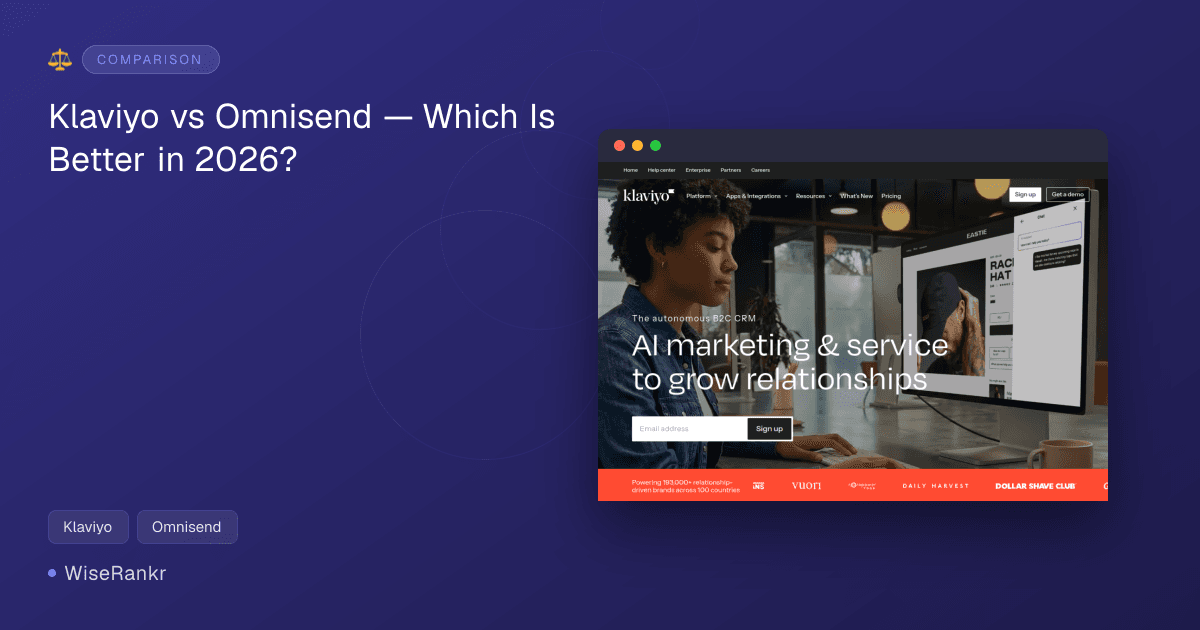
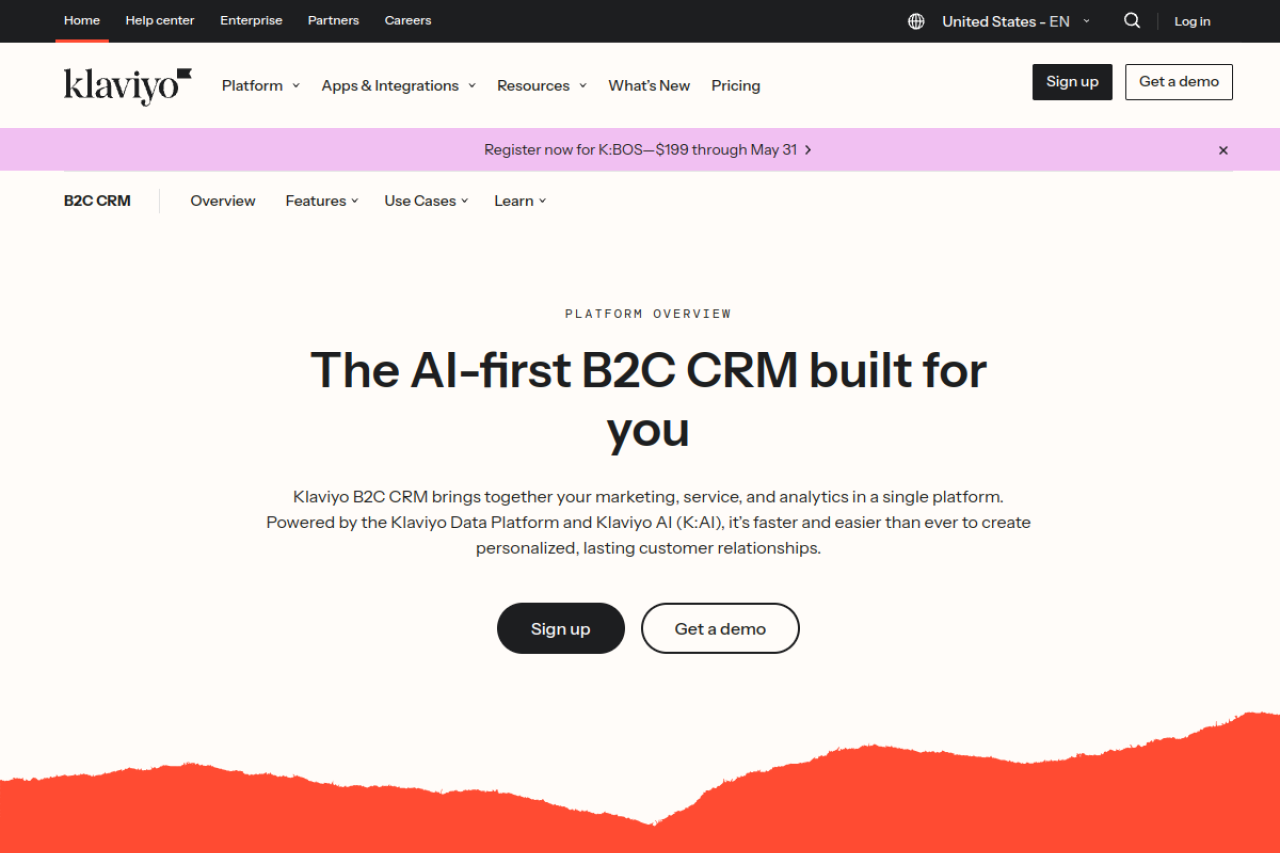
Klaviyo positions itself as an "AI-first B2C CRM built for B2C brands." Since its inception in 2012, Klaviyo has evolved from a customer database to a unified platform combining marketing automation, analytics, and customer service. It leverages real-time product and behavioral data to enable hyper-personalized customer journeys across email, SMS, and even WhatsApp marketing.
Klaviyo is designed for businesses that prioritize deep data integration and advanced AI-driven personalization. Its core strength lies in its ability to synchronize extensive e-commerce data, allowing for sophisticated segmentation and predictive analytics. Users on G2 frequently praise its Shopify integration and powerful automation flows.
Klaviyo's Market Positioning and Key Strengths:
- Target Audience: Mid-sized to large e-commerce businesses, and enterprise-level brands that require extensive customization and data-driven insights.
- Core Focus: Hyper-personalization, predictive AI (churn, next order date, LTV), and a comprehensive B2C CRM experience.
- Notable Features: Marketing Agent (AI campaign creation), Customer Agent (autonomous customer service), dynamic product recommendations, and cross-channel orchestration.
- Competitors: Braze, Drip, Shopify Email, and to some extent, broader marketing automation platforms like Adobe (Marketo Engage, Campaign) and Salesforce.
Omnisend Overview: E-commerce Marketing Automation for Growth
Omnisend is an email and SMS marketing automation platform purpose-built for e-commerce businesses. It aims to provide extensive omnichannel capabilities without the complexity often associated with more enterprise-grade solutions. Omnisend emphasizes ease of use, making advanced marketing accessible to a wider range of businesses, including startups and small to medium-sized online stores.
Users frequently highlight Omnisend's straightforward interface and pre-built e-commerce flows, which allow businesses to quickly implement effective marketing campaigns. Its generous free plan is particularly appealing to businesses just starting out or looking to minimize initial overhead.
Omnisend's Market Positioning and Key Strengths:
- Target Audience: Small to medium-sized e-commerce businesses, startups, and those looking for a user-friendly platform with strong e-commerce integrations.
- Core Focus: Comprehensive email and SMS marketing automation, web push notifications, and AI features designed to simplify campaign creation and audience insights.
- Notable Features: Extensive free plan with access to most professional features, easy migration tools (even from Klaviyo), and a clean, logical user experience.
- Competitors: Mailchimp, ActiveCampaign, HubSpot Marketing Hub, and Constant Contact.
Essential Feature Comparison: Klaviyo vs. Omnisend
While both platforms excel in e-commerce marketing, their feature sets have distinct nuances. Here’s a side-by-side comparison of their key offerings:
| Feature | Klaviyo | Omnisend |
|---|---|---|
| Primary Focus | AI-first B2C CRM, deep data analytics, predictive insights | E-commerce email & SMS automation, ease of use |
| Email Marketing | AI-powered subject line generator, drag-and-drop editor, customizable templates, advanced personalization (product recommendations, browsing history) | Drag-and-drop editor, pre-built templates, A/B testing, personalized product recommendations (additional cost on Standard plan) |
| SMS Marketing | Integrated SMS and WhatsApp marketing, cross-channel flows | Integrated SMS, international texting, SMS credits (Pro plan) |
| Marketing Automation | Robust flow builder for abandoned carts, post-purchase, win-back; Marketing Agent for campaign creation | Pre-built e-commerce workflows (welcome, abandoned cart, order confirmation), workflow automation |
| Segmentation | Advanced segmentation based on any data point from any source, across all time; 350+ built-in integrations | Basic and advanced segmentation, audience trends powered by AI |
| AI Capabilities | Composer (AI agent for campaigns), Marketing Agent, Customer Agent (autonomous service), Klaviyo AI for testing | Build forms with AI, spot audience trends, get AI insights |
| Reporting & Analytics | Built-in reporting, dashboards, revenue attribution, predictive analytics (churn, LTV) | Built-in reporting, email campaign performance, advanced reporting (Pro plan) |
| Other Channels | Mobile push, Reviews, Social marketing, RCS for Business | Web push notifications |
| Integrations | 350+ built-in integrations (e.g., Shopify, WooCommerce, BigCommerce) | 200+ pre-built integrations, flexible APIs |
Pricing Comparison: Who Offers More Value?
Pricing is often a decisive factor, and both platforms have distinct models. It's crucial to understand the nuances, especially in light of Klaviyo's recent billing changes.
Klaviyo Pricing
Klaviyo's pricing is primarily based on the number of active profiles and email sends/mobile message credits. It offers a free plan, but paid tiers can scale rapidly.
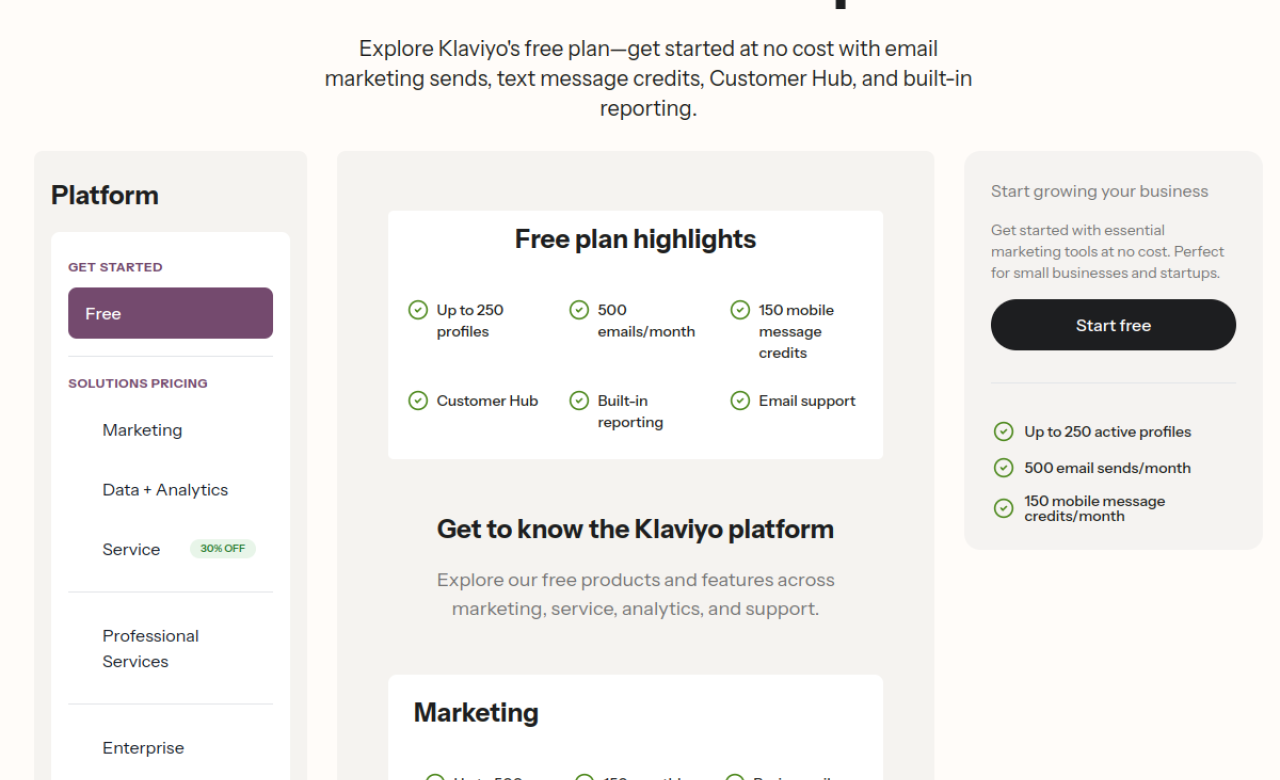
- Free Plan:
- Up to 250 profiles
- 500 emails/month
- 150 mobile message credits
- Includes Customer Hub, built-in reporting, email support for the first 60 days, basic email templates, AI-powered subject line generator, Marketing Agent for campaign creation.
- Paid Plans (Examples):
- 251-500 contacts: $20/month (Email only), $35/month (Email + SMS)
- 501-1,000 contacts: $30/month (Email only), $45/month (Email + SMS)
- 1,001-2,500 contacts: $60/month (Email only), $75/month (Email + SMS)
- 2,501-5,000 contacts: $100/month (Email only)
Klaviyo's Billing Structure: As of February 2025, Klaviyo shifted its billing model from emails sent to active profiles. This change has led to significant and sometimes unexpected cost increases for many users, with some reporting bills jumping substantially overnight. This structure makes Klaviyo potentially more expensive as your customer database grows, regardless of how frequently you email them.
Target Audience for Klaviyo Pricing: Businesses with established revenue streams that can absorb higher marketing costs and benefit significantly from Klaviyo's advanced segmentation, predictive analytics, and AI agents. The free plan is suitable for very small businesses or for testing the platform.
Omnisend Pricing
Omnisend also uses a contact-based tiered pricing model for email, SMS, and automation flows, with an emphasis on making advanced features accessible even on its free tier.
- Free Plan:
- Up to 250 unique contacts per month
- 500 emails per month
- 500 Web Push notifications
- 60 SMS (trial)
- Includes access to most professional features (automations, A/B testing, segmentation). Omnisend branding is present.
- Standard Plan:
- Starts at $16.00/month (for 501-1,000 contacts)
- Monthly emails: 12x your list size
- Unlimited web push notifications
- 24/7 priority chat support
- Omnisend branding removed
- Personalized content blocks (e.g., product recommendations) incur an additional $5.00/month.
- Pro Plan:
- Starts at a higher price (e.g., $59/month for 2,500 contacts)
- Unlimited monthly emails
- SMS credits included (monthly rebate equal to plan price)
- Advanced reporting, priority support
- Designed for high-volume senders, especially those heavy on SMS.
- Enterprise Plan: Custom pricing for businesses with specific needs, large lists, or very high email volumes.
Additional Omnisend Costs: SMS costs are extra beyond the Pro plan's included credits and are based on a credit system (e.g., $0.015 for a standard US SMS). Credits expire in 60 days. Carrier surcharges and multi-part messages (long SMS, emojis) can increase SMS costs.
Target Audience for Omnisend Pricing: Small to medium-sized e-commerce businesses and startups. Its free plan is very generous, and paid plans offer good value for scaling businesses, particularly those looking for a balanced approach to email and SMS without the premium cost of more complex solutions.
Pros and Cons: A Balanced View
Klaviyo
Pros:
- Deep E-commerce Integration: Seamlessly integrates with major platforms like Shopify, making data synchronization effortless.
- Advanced AI & Personalization: Unmatched capabilities for predictive analytics, hyper-segmentation, and AI-driven campaign creation (Marketing Agent, Composer).
- Comprehensive B2C CRM: Unifies marketing, analytics, and customer service, providing a holistic view of the customer journey.
- Robust Automation: Powerful flow builder for complex, multi-step customer journeys.
- Cross-Channel Reach: Supports email, SMS, WhatsApp, mobile push, and reviews from a single platform.
Cons:
- High Cost: The shift to active profile-based billing in 2025 led to significant and often unexpected cost increases for many users, making it a premium solution. Reddit users note the "premium for the convenience."
- Complexity: While powerful, the extensive features and data-driven approach can have a steeper learning curve for beginners.
- Support & Billing Concerns: Trustpilot reviews specifically highlight billing disputes and support complaints, although G2 reviews are largely positive regarding functionality.
- Vendor Lock-in: The deep integration and reliance on Klaviyo's data platform can make migration challenging for heavily invested users.
Omnisend
Pros:
- User-Friendly Interface: Highly praised for its ease of use and quick setup, even for complex automations. G2 users report getting the hang of it "within 10-20 minutes."
- Generous Free Plan: Offers robust features, including automations and segmentation, making it excellent for startups and small businesses.
- Cost-Effective: Generally more affordable than Klaviyo, especially for businesses with growing contact lists but controlled send volumes.
- Strong E-commerce Focus: Designed specifically for online stores, with pre-built workflows and integrations.
- Good Customer Support: Trustpilot and G2 reviews often highlight helpful staff and quick response times, despite some isolated complaints.
Cons:
- Less Advanced AI & Predictive Analytics: While it has AI features, they are not as deep or comprehensive as Klaviyo's predictive AI and B2C CRM capabilities.
- SMS Cost Management: While included on Pro, SMS can add up quickly, especially with longer messages or international sends, and credits expire after 60 days.
- Scalability Limitations: Reddit threads suggest that while excellent for small to medium businesses, its limitations may become apparent as stores scale significantly and require more granular control or advanced data science.
- Fewer Channels: Primarily focuses on email, SMS, and web push, lacking the broader channel support of Klaviyo (e.g., WhatsApp, Reviews).
Who Should Use Which?
The choice between Klaviyo and Omnisend largely depends on your business size, budget, technical expertise, and specific marketing goals.
Choose Klaviyo if:
- You are a mid-sized to large e-commerce business with significant revenue and an established customer base.
- You require deep, data-driven personalization and predictive analytics to optimize customer lifetime value (LTV) and reduce churn.
- Your marketing strategy involves complex, multi-channel customer journeys that leverage email, SMS, WhatsApp, and mobile push.
- You need a unified B2C CRM to integrate marketing, analytics, and customer service functions.
- You are willing to invest a premium for cutting-edge AI tools like Marketing Agent and Customer Agent to automate campaign creation and support.
- Your team has the technical expertise to leverage its advanced features.
Choose Omnisend if:
- You are a small to medium-sized e-commerce business or a startup looking for an affordable yet powerful marketing solution.
- You prioritize ease of use and quick setup to launch email and SMS campaigns rapidly.
- You need a generous free plan to get started with essential marketing automation features.
- Your primary focus is on email and SMS marketing with web push notifications as an additional channel.
- You want a platform that offers good value for money and transparent, contact-based pricing that is generally more predictable than Klaviyo's post-2025 model.
- You appreciate strong customer support and a clear, intuitive interface.
The WiseRankr Verdict
In the Klaviyo vs Omnisend debate, there isn't a single "better" platform; rather, there's a better fit for different stages and scales of e-commerce business. Klaviyo stands as the more advanced, AI-driven powerhouse, ideal for businesses ready to invest heavily in hyper-personalization and predictive growth at scale. Its comprehensive B2C CRM capabilities and deep data integration are unrivaled for those who can afford its premium price point and navigate its complexity.
Omnisend, conversely, offers an incredibly accessible and user-friendly experience, making it an excellent choice for small to medium-sized businesses and startups. Its robust feature set, particularly on the free plan, provides significant value and a clear path to scaling email and SMS marketing without breaking the bank. While it may not have Klaviyo's deep predictive AI, its ease of use and cost-effectiveness make it a strong contender for businesses focused on efficient, straightforward e-commerce marketing.
Ultimately, evaluate your current needs, budget, and future growth projections closely. Both platforms offer free trials, so we recommend testing them out to see which interface and feature set aligns best with your team's workflow and your business's objectives in 2026.
People Also Ask
What is the main difference between Klaviyo and Omnisend pricing?
Klaviyo's pricing, especially after its 2025 shift, is based on the number of active profiles, which can lead to rapid cost increases as your customer database grows, regardless of email send volume. Omnisend also uses a contact-based model but is generally considered more cost-effective, with tiered plans and more predictable SMS costs, although SMS credits can expire.
Is Klaviyo or Omnisend better for small businesses and startups?
Omnisend is generally considered better for small businesses and startups due to its more generous free plan and lower entry-level pricing for paid tiers. Its user-friendly interface also means a quicker learning curve, allowing smaller teams to implement effective marketing campaigns faster.
Can I migrate from Klaviyo to Omnisend?
Yes, Omnisend explicitly offers tools and support for migrating from Klaviyo. Their website highlights "Migrate from Klaviyo" as a key feature, promising to help businesses save money and potentially achieve better deliverability. Visit Omnisend.com for more details on their migration process.
Which platform offers more advanced AI features for e-commerce marketing?
Klaviyo offers significantly more advanced AI features, including its Composer (AI agent for campaigns), Marketing Agent (builds campaigns from a URL), Customer Agent (autonomous customer service), and predictive AI for churn and LTV. Omnisend includes AI for building forms, spotting audience trends, and general insights, but not at the same depth as Klaviyo.